
Master every corner of IGCSE Combined Science
From cell structure to space physics, this school walks you through the full Cambridge IGCSE Combined Science syllabus — Biology, Chemistry, and Physics — in plain language first, then builds your precision, your exam technique, and your genuine love of science, all the way from Form 1 to Form 4.
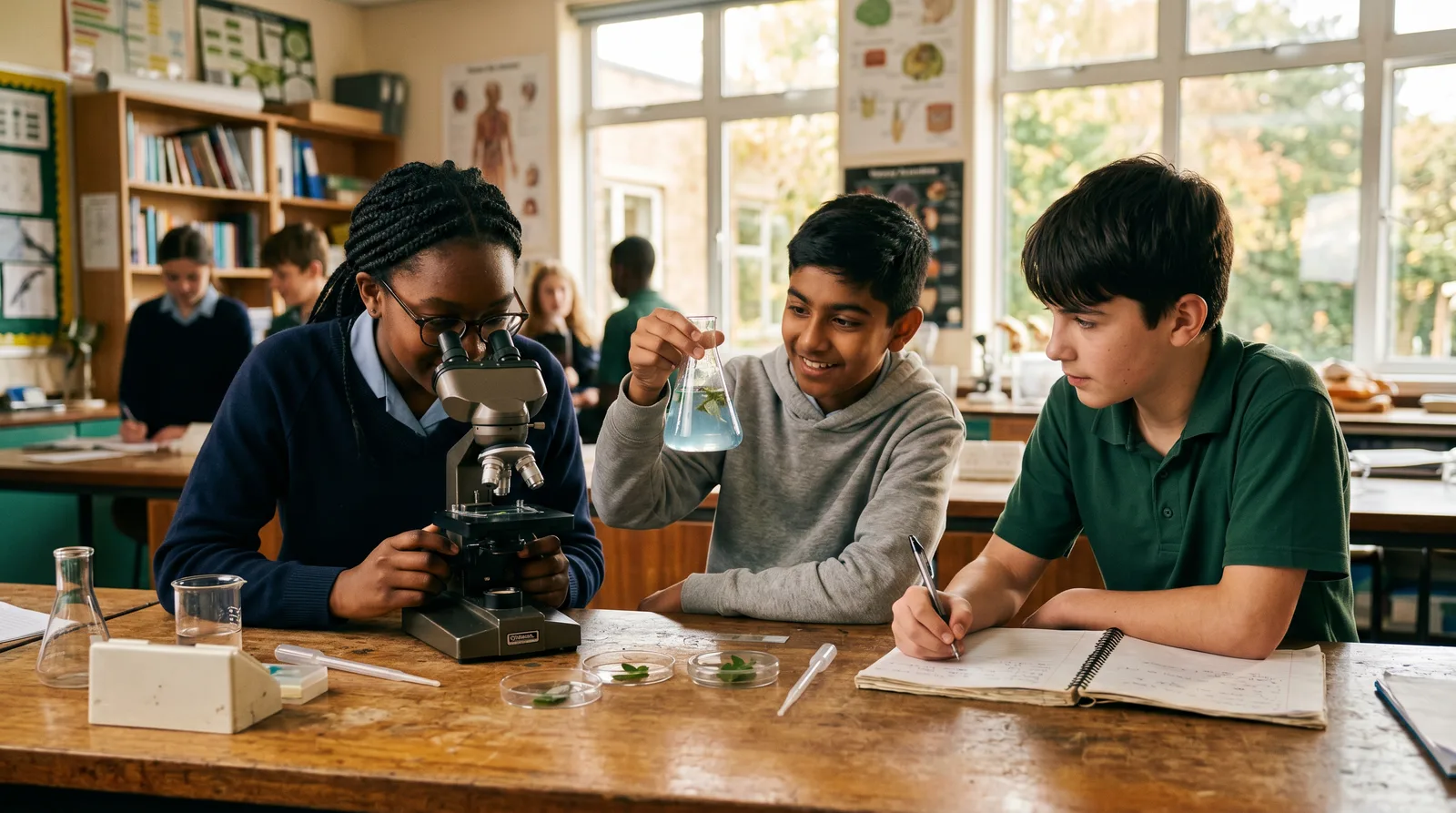
"Science should feel like doors opening — so I always start with the 'why', and the rest follows naturally."
— Renstay College
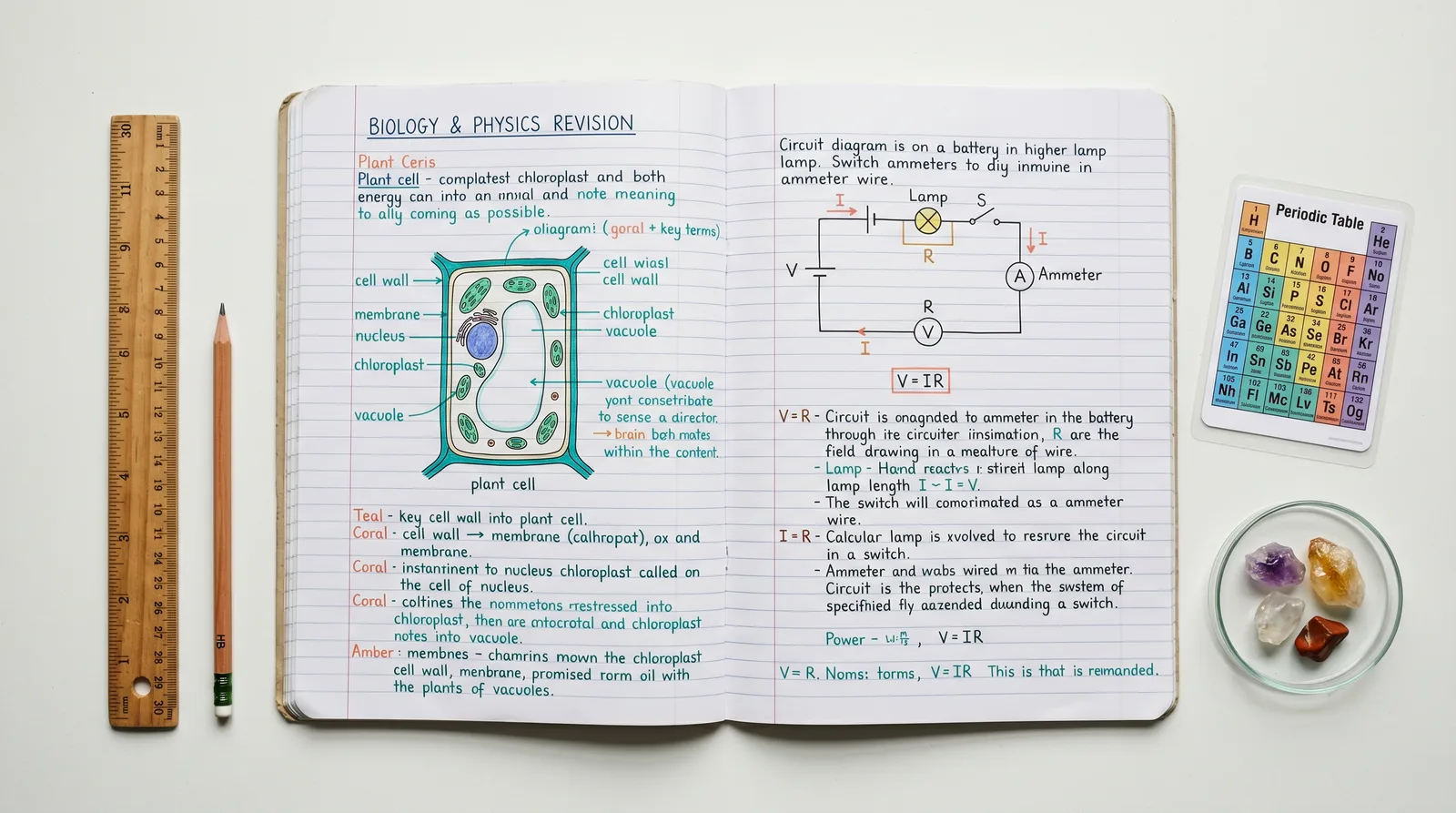
What you'll learn
What you'll be able to do
- Explain and apply core concepts across all three sciences — Biology, Chemistry, and Physics — as required by the Cambridge IGCSE Combined Science syllabus.
- Interpret and draw scientific diagrams, graphs, and data tables to the standard expected in IGCSE written papers.
- Design and evaluate experiments using correct scientific method, including identifying variables, writing hypotheses, and analysing results.
- Solve quantitative problems — from stoichiometry and circuit calculations to speed–distance–time — using the correct formulae and unit conventions.
- Confidently tackle both Multiple Choice and structured exam questions with targeted technique, timing strategies, and mark-scheme awareness.
- Connect classroom science to real-world phenomena and current issues, building genuine curiosity and a strong foundation for A-Level or equivalent study.
How it works
A school that adapts to you
This isn't a set of static videos. Every lesson is generated live and tuned to where you actually are.
We learn your level
A quick placement check tailors your starting point so you're never bored or lost.
Lessons adapt as you go
Each lesson is written for your pace and your goal, adjusting as your skills grow.
Your AI coach keeps you moving
Checkpoints, feedback, and gentle nudges turn progress into a real result.
The curriculum
What's inside your school
48 modules · 110 lessons

does not need to coincide exactly with any of the points but there should be a roughly even distribution of points either side of the line over its entire length
- 1.1Characteristics of living organisms CoreIncluded
Cells
- 2.1Cell structureIncluded
- 2.2Size of specimensIncluded
Calculate magnification and size of biological specimens using millimetres as units
- 3.1DiffusionIncluded
- 3.2OsmosisIncluded
- 3.3Active transportIncluded
Biological molecules
- 4.1Biological moleculesIncluded
Enzymes
- 5.1EnzymesIncluded
Plant nutrition
- 6.1PhotosynthesisIncluded
- 6.2Leaf structureIncluded
Human nutrition
- 7.1DietIncluded
- 7.2Digestive systemIncluded
Human nutrition (continued)
- 8.1DigestionIncluded
Transport in plants
- 9.1Xylem and phloemIncluded
- 9.2Water uptakeIncluded
- 9.3TranspirationIncluded
Transport in animals
- 10.1Circulatory systemsIncluded
- 10.2HeartIncluded
Transport in animals (continued)
- 11.1Heart (continued)Included
- 11.2Blood vesselsIncluded
- 11.3BloodIncluded
Diseases and immunity
- 12.1Diseases and immunityIncluded
Gas exchange in humans
- 13.1Gas exchange in humansIncluded
Respiration
- 14.1RespirationIncluded
Drugs
- 15.1DrugsIncluded
Reproduction
- 16.1Sexual reproduction in plantsIncluded
Reproduction (continued)
- 17.1Sexual reproduction in humansIncluded
Organisms and their environment
- 18.1Energy flowIncluded
- 18.2Food chains and food websIncluded
Organisms and their environment (continued)
- 19.1Food chains and food webs (continued)Included
- 19.2Carbon cycleIncluded
Human influences on ecosystems
- 20.1Habitat destructionIncluded
- 20.2ConservationIncluded
States of matte
- 21.1Solids, liquids and gasesIncluded
Atoms, elements and compounds
- 22.1Elements, compounds and mixturesIncluded
- 22.2Atomic structure and the Periodic TableIncluded
Atoms, elements and compounds (continued)
- 23.1Ions and ionic bondsIncluded
- 23.2Simple molecules and covalent bondsIncluded
Stoichiometry
- 24.1FormulasIncluded
Electrochemistry
- 25.1ElectrolysisIncluded
Chemical energetics
- 26.1Exothermic and endothermic reactionsIncluded
Chemical reactions
- 27.1Physical and chemical changesIncluded
- 27.2Rate of reactionIncluded
Chemical reactions (continued)
- 28.1Rate of reaction (continued)Included
- 28.2RedoxIncluded
Acids, bases and salts
- 29.1The characteristic properties of acids and basesIncluded
- 29.2OxidesIncluded
- 29.3Preparation of saltsIncluded
The Periodic Table
- 30.1Arrangement of elementsIncluded
- 30.2Group I propertiesIncluded
- 30.3Group VII propertiesIncluded
The Periodic Table (continued)
- 31.1Transition elementsIncluded
- 31.2Noble gasesIncluded
Metals
- 32.1Properties of metalsIncluded
- 32.2Uses of metalsIncluded
Metals (continued)
- 33.1Alloys and their propertiesIncluded
- 33.2Reactivity seriesIncluded
Metals (continued)
- 34.1Corrosion of metalsIncluded
- 34.2Extraction of metalsIncluded
Chemistry of the environment
- 35.1WaterIncluded
- 35.2Air quality and climateIncluded
Chemistry of the environment (continued)
- 36.1Air quality and climate (continued)Included
Organic chemistry
- 37.1TerminologyIncluded
- 37.2FuelsIncluded
Organic chemistry (continued)
- 38.1AlkanesIncluded
- 38.2AlkenesIncluded
- 38.3PolymersIncluded
Experimental techniques and chemical analysis
- 39.1Experimental designIncluded
- 39.2ChromatographyIncluded
Experimental techniques and chemical analysis (continued)
- 40.1Separation and purificationIncluded
- 40.2Identification of ions and gasesIncluded
Experimental techniques and chemical analysis (continued
- 41.1Identification of ions and gases (continued)Included
Motion, forces and energy
- 42.1Physical quantities and measurement techniquesIncluded
- 42.2MotionIncluded
Motion, forces and energy (continued)
- 43.1Motion (continued)Included
- 43.2Mass and weightIncluded
- 43.3ForcesIncluded
- 43.4DensityIncluded
- 43.5WorkIncluded
- 43.6Energy resourcesIncluded
- 43.7PowerIncluded
- 43.8PressureIncluded
Kinetic particle model of matter
- 44.1States of matterIncluded
- 44.2Particle modelIncluded
- 44.3Pressure changesIncluded
- 44.4Thermal expansion of solids, liquids and gasesIncluded
- 44.5EvaporationIncluded
- 44.6ConductionIncluded
- 44.7ConvectionIncluded
Transfer of thermal energy
- 45.1RadiationIncluded
- 45.2Consequences of thermal energy transfeIncluded
Waves
- 46.1General properties of wavesIncluded
- 46.2Reflection of lightIncluded
- 46.3Thin converging lensIncluded
- 46.4Dispersion of lightIncluded
- 46.5Electromagnetic spectrumIncluded
- 46.6SoundIncluded
Electricity
- 47.1Electrical chargeIncluded
- 47.2Electric currentIncluded
- 47.3Voltage (electromotive force and potential difference)Included
- 47.4ResistanceIncluded
- 47.5Electrical energy and electrical powerIncluded
- 47.6Electrical circuitsIncluded
- 47.7Series and parallel circuitsIncluded
- 47.8Electrical safetyIncluded
- 47.9Cells, batteries, generators and motorsIncluded
Space physics
- 48.1The Solar SystemIncluded
- 48.2Stars and the UniverseIncluded
- 48.3Life cycle of starsIncluded
- 48.4Galaxies and the UniverseIncluded
Who it's for
Is this you?

The Form 1 Starter
Just beginning the IGCSE journey and wants to build solid foundations in all three sciences from day one.

The Form 4 Exam Sprinter
Exams are on the horizon and they need targeted practice, mark-scheme know-how, and confidence — fast.

The Maths-Shy Scientist
Strong on concepts but intimidated by formula rearrangement, stoichiometry, and the numbers side of science.

The Supportive Parent
Wants to understand what their child is studying so they can ask the right questions and give meaningful help at home.

The Private Tutor
Needs a clear, syllabus-aligned resource to structure sessions, fill gaps, and sharpen students' exam technique.

The Curious All-Rounder
Doing well in science but wants to go deeper — connect classroom theory to the real world and lay the groundwork for A-Level.
Questions
Frequently asked
Your teacher
A note from your teacher
Renstay College
If you've ever stared at a Biology diagram, a Chemistry equation, and a Physics formula in the same revision session and wondered how you're supposed to hold all of this in your head at once — this letter is for you.
IGCSE Combined Science is genuinely ambitious. Three full science disciplines, years of content, practical skills, quantitative maths, and the exam technique to translate all of that into marks on the day. I've seen clever, hardworking students feel completely overwhelmed — not because science is beyond them, but because nobody has ever walked them through it in a clear, connected, logical way. That's exactly the gap this school was built to fill.
Here's what I believe about science education: understanding always has to come before memorisation. If you get why diffusion matters in gas exchange, you don't have to cram it — it just makes sense. If you understand why a covalent bond forms the way it does, the rest of the bonding topic falls into place. So every lesson in this school starts in plain language, with a real-world hook or a familiar analogy, and then builds carefully toward the precise scientific vocabulary and exam-ready explanations Cambridge is looking for. We never skip the "but why?" — that's where the learning actually happens.
This school covers every Biology, Chemistry, and Physics topic on the syllabus, but I've also made sure the skills that run across all three sciences get the serious attention they deserve. The maths — from formula rearrangement to stoichiometry to circuit calculations — has its own dedicated strand so it stops being a hidden barrier. Practical and investigative skills are taught systematically, including exactly how to approach the Alternative-to-Practical paper. And the Exam Mastery strand is honest and specific: here's what the mark scheme is actually looking for, here's how to structure a six-mark answer, here's how to manage your time on the multiple-choice paper. No vague advice. Real, usable technique.
Whether you're a student building your foundations in Form 1, a Form 4 student in the final stretch before exams, a parent trying to support from the sidelines, or a tutor looking for a clear, syllabus-aligned resource — you are welcome here. Science should feel like it's opening doors, not closing them. Come in, take it one step at a time, and let's make the whole thing click.
— Renstay College
Start your journey today
Get instant access — learn at your own pace with an AI coach in your corner.
$10/mo
Recurring billing · cancel anytime
Enrolling a child? Sign up as a parent — you'll add your student right here after.
Secure checkout · Instant access
- 48 modules, 110 lessons
- AI-adaptive lessons tuned to your level
- Quizzes & checkpoints to lock in progress
- Your own AI learning coach
- Learn on any device, at your pace
- Full access for as long as you're subscribed